
The Christian world was rocked 70 years ago this week, when five young missionaries–Jim Elliot, Nate Saint, Roger Youderian, Ed McCully and Pete Fleming–were killed deep in the Amazonian rainforest of Ecuador. The men had been dropping gifts from their plane to establish connection with the tribal Waorani people in order to eventually bring the gospel to them. When attempting their second face to face interaction on Waorani land, the Waorani, who were deeply skeptical of all outsiders, brutally murdered the five American missionaries.
Elisabeth Elliot, widow of Jim, recounted the story in Through Gates of Splendor. Whether Elisabeth’s name is familiar to you or not, her life and writing is worthy of our attention.
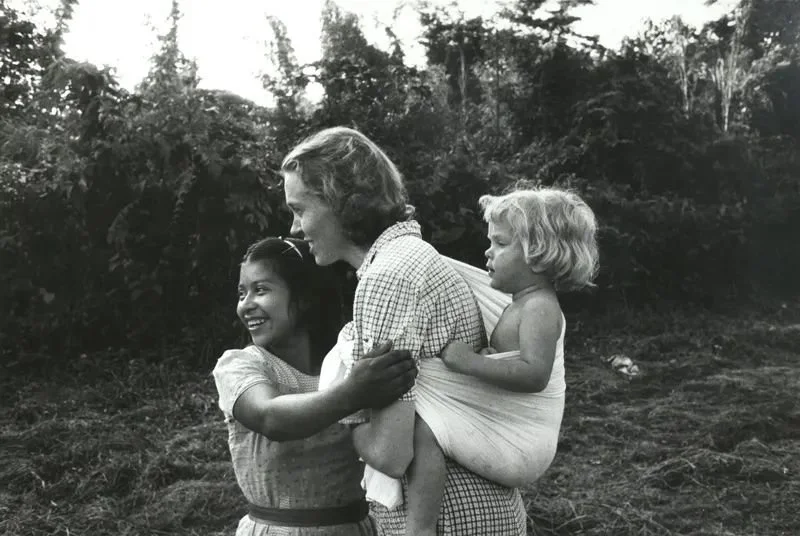
She was thrust into international notice when Life magazine came to report on the incident. At the time of her husband’s death, she had a 10 month old daughter, Valerie. Elisabeth chose to stay and work in Ecuador. As a single mother alone on the mission field, Elisabeth adopted a practical approach to life, which was to do the next thing. That focus, guided by prayer, helped her navigate uncertainty and grief by taking action. It was the only way she could get through the demands of her day.
In time, the Waorani people allowed Elisabeth to live with them, eventually some believed the gospel message.
Elisabeth’s life is marked with keen perspectives on Christianity, culture, obedience to God, and in particular suffering and loneliness. Throughout the rest of her life she wrote extensively (some 35 books) about her faith journey.
In preparing to write about Elisabeth, I have been able to reacquaint myself with the beauty of her words and the sharpness of her mind. She kept extensive journals chronicling her struggles with suffering, true faith, relationships and doubt.
One of my favorites is These Strange Ashes which tells of her first year as a single woman on the mission field. After spending time in Quito, Ecuador in language study, Elisabeth went to work with an indigenous people called the Colorados. Her goal was to develop a written form of their language in order to eventually translate the New Testament. In that year she discovered many hard truths and experienced serious losses.
An early observation as she traveled into the jungle was that she had been “dropped into an uninhabited fold of the earth.” I admire her fearlessness as she immersed herself in that world. As a gifted linguist, Elisabeth took every opportunity to engage with the Colorados people, to learn their ways and hear them speak. Often she risked treacherous journeys through the forest, but meanwhile was fascinated by every “weird and wonderful” bird or insect. She experienced rain as never before, quoting Job, that the rain was as the “tilting of the water skins of heaven.”
In that remote world her faith was tested, especially when all her endeavors there came to nothing. Still, she concluded God’s story for her would not end in ashes. She knew that, “the Everlasting Arms have not let go their hold.”
Elisabeth’s writings received the adoration of the evangelical community, until her books didn’t fit the mold of victorious Christian storytelling. She told the story as she saw it. She would not offer a “whitewashed Christianity” or sanitized version. Rejection and harsh criticism came her way. Still, she knew that authentic faith should own the pain and disappointments of one’s journey, not just the successes and joys.
Elisabeth wrote a biography about her inspiration, Amy Carmichael, an English missionary to India. Amy became Mother to hundreds of orphans. The book concludes that Amy was one who Loved the Lord and “staked everything on God’s faithfulness.” Amy’s influence empowered Elisabeth to soldier on, no matter what others thought.
Twelve Baskets of Crumbs, a book of essays, shines with wit and clear observation of others and herself. At times her words bring to life nature as when she writes about the surf:
The ocean can teach us many things. Change is its essence…The waves roll in, sweep the shore, suck out and roll in again…The swell and the crest,...the glass-green turning to milk-white, the foam, the bubbles, the thin sheet that slides back so smoothly and disappears…but each change is in perfect harmony with the nature of the ocean.
She saw that Jesus instructed the disciples to gather the crumbs after feeding the five thousand. She uses the baskets as a metaphor for not wasting even the crumbs from God’s table of grace.
A recent two-volume biography, titled Becoming Elisabeth and Being Elisabeth by Ellen Vaughn captures the essence of Elisabeth. She grew up in Germantown, Pennsylvania and Moorestown, New Jersey. Her days at her beloved Wheaton College widened her understanding of commitment to Christ and ministry. We learn that she exulted in trips to the White Mountains where she vacationed as a child, describing them as the "vestibule of heaven.” And it was there she and Valerie settled after leaving Ecuador. She loved teacups (my kind of girl.) We find that Elisabeth recognized her own failings, writing in her journal, “Alas, I am ridiculous; God help me!” She also dealt with challenging differences with colleagues, often being misunderstood.
Her words crackle with fire and at times frustration, but always faith. Her writing is most compelling when she addresses the topics of suffering and loneliness. As a woman twice widowed, Elisabeth knew the path of suffering. She believed that, "whatever is in the cup that God is offering to me, whether it be pain and sorrow and suffering and grief along with the many more joys, I'm willing to take it because I trust Him." This truth grounded her.
She also wrote, "To be a follower of the Crucified means, sooner or later, a personal encounter with the cross. And the cross always entails loss.” It is through her struggles, these encounters with the cross, that she realized suffering and loneliness are gifts from God that shaped her and drew her even closer to Him. She came to learn acceptance, and by accepting the pain of her life, she offered that hurt back to God in complete surrender.
This tribute for Elisabeth Elliot has been a joy for me to rediscover the character of this contender for the faith. I want to read more of her writing because she was resolute in her confidence in God. Her life, shaped by suffering and identifying with Christ and His cross, serves most by giving me fresh eyes to see how God loves me enough to shape me. So, I too, desire more of Him.
For more resources and podcasts on Elisabeth, check out elisabethelliot.org. Elisabeth Elliot died in 2015. Her foundation seeks to promote Hope for Suffering, Restoration in Conflict and Joy in Obedience to the Lord Jesus Christ.

ABOUT THE BLOGGER:
Linnea Tideman has always enjoyed sharing stories. Her childhood in New Hampshire and her Swedish heritage have provided her with a wealth of experiences, but also the foundation of her faith. She enjoys creative projects, travel, books, sewing, gardening, but most of all hospitality, often hosting fancy teas and occasionally something grand like recreating dinner on the Titanic. She serves the UrbanPromise and Good Neighbors ministries. Linnea lives in Landenberg with her husband Dave. They have three grown daughters. She hopes that her writing reflects how God continues to reveal Himself to us as our shepherd and Savior.